The Memory of Stone
Jun 02, 2026The Memory of Stone
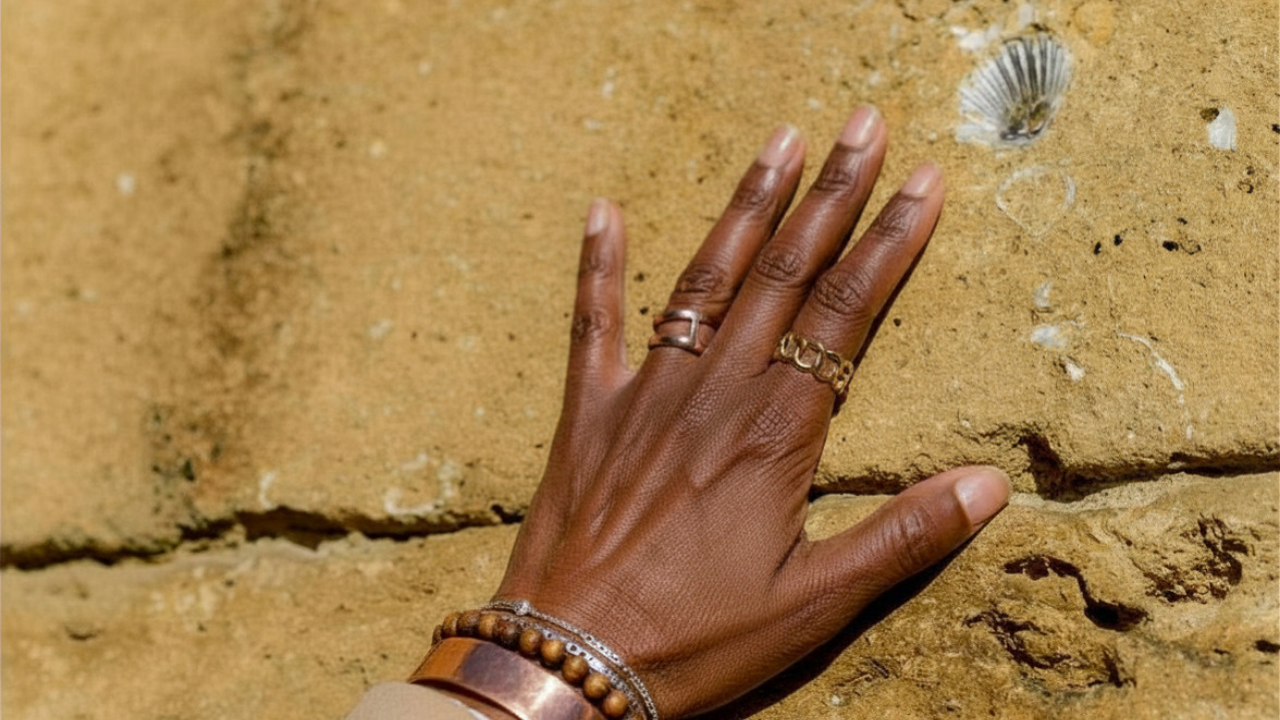
When I stepped away from my long-held role as Executive Director, I received an unexpected invitation, a letter about an international convention featuring family and Indigenous miners from across the world. It felt like a call from deep within the earth itself, a reminder of what I had once known but set aside. Decades earlier, in my twenties, I had surrounded myself with crystals, clear quartz on my altar, rose quartz near my bed, and small stones tucked in my pockets before performances or important meetings. They were quiet companions that grounded and expanded me at once. Over the years, though, life layered on new responsibilities. The stones remained, but I had stopped listening to their still, subtle messages.
The invitation reawakened something ancient in me. When I arrived at that gathering, I was drawn to a table filled with raw crystals, not polished or commercialized, but alive. The family miners I met had traveled from Madagascar, Brazil, Ethiopia, Mexico, and Peru, bringing the earth’s deep memory in their hands. The Ethiopian vendor showed me strands of delicate opals that shimmered from blue to gold to violet, their hues shifting with the angle of light, as though they held the memory of water and flame at once. He spoke of the miners in his community who worked with reverence, never taking more than the land would give. That conversation anchored me. I felt a pull, a vibration beneath my palms, a reconnection to an elemental ally that had waited patiently for me to return.
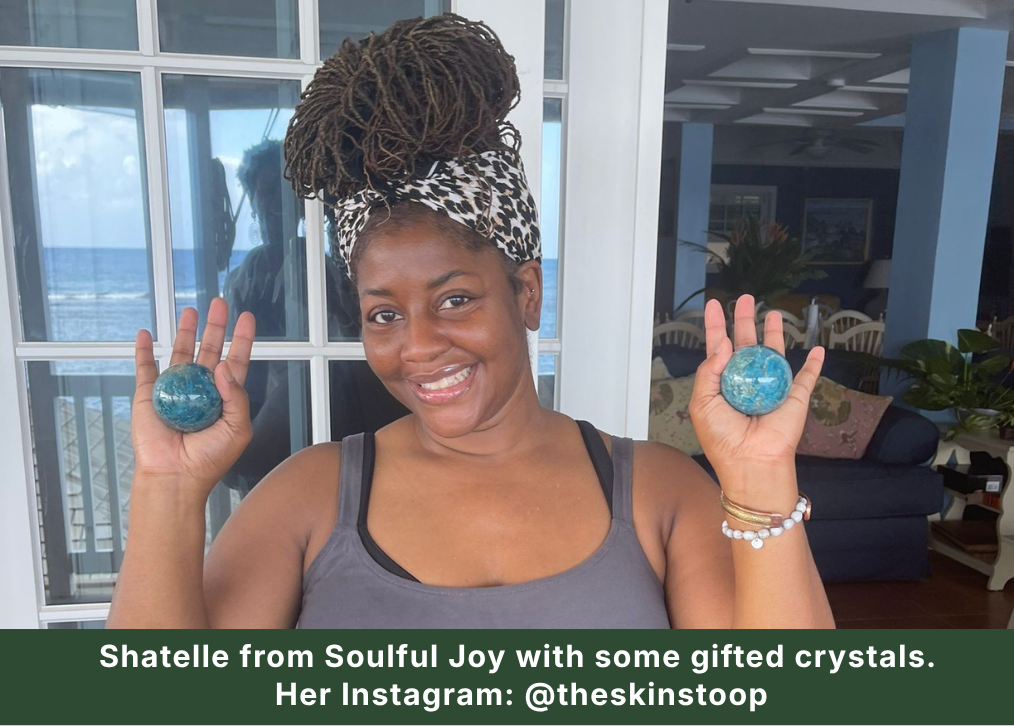
Since that day, I have shared these stones in my retreats, first informally, and later through Soulful Joy, not for ornamentation, but for orientation. Each retreat became a living classroom for remembering that the earth itself teaches, holds, and transforms.
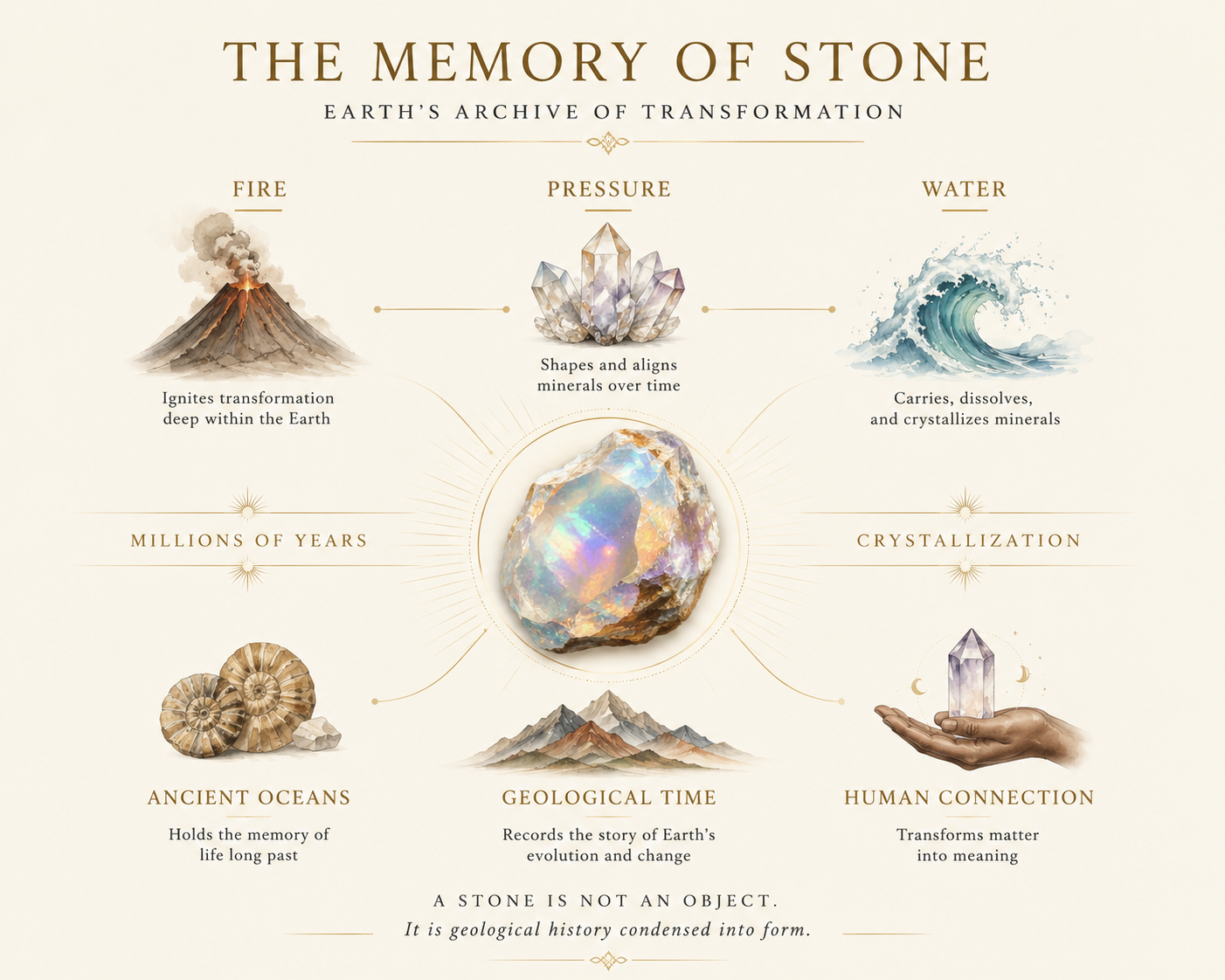
Scientifically, stones are not lifeless objects. They are time made visible. Formed through heat, pressure, cooling, and crystallization, they record the geological and chemical history of our planet. Rocks, minerals, and crystals are related yet distinct.
Rocks are composed of one or more minerals and form the crust of the Earth. Minerals are naturally occurring substances with specific chemical compositions and structures. Crystals are minerals whose atoms align in repeating geometric patterns, creating the symmetry and beauty we see in quartz, amethyst, or sapphire.
What we call semi-precious or precious stones are all part of this mineral continuum. Diamonds are pure carbon compressed over millions of years. Rubies and sapphires are variations of the mineral corundum, colored by trace elements of chromium or iron. Emeralds are beryl infused with chromium and vanadium. Amethyst and citrine are quartz crystals infused with iron. The difference between a stone in the earth and a gem in a crown is not essence, only exposure. Both are crystallized stories of time, temperature, and transformation.
When we touch a piece of granite on a countertop, a slab of marble in a bath, or a river stone on a path, we touch millions of years of compression and metamorphosis. Natural stone vibrates faintly with the electromagnetic fields of the earth. Studies in geophysics and piezoelectricity confirm that quartz, for instance, generates an electric charge when pressure is applied, the same property that powers watches and scientific instruments. So when we hold quartz, we are literally in touch with the charge of the planet.
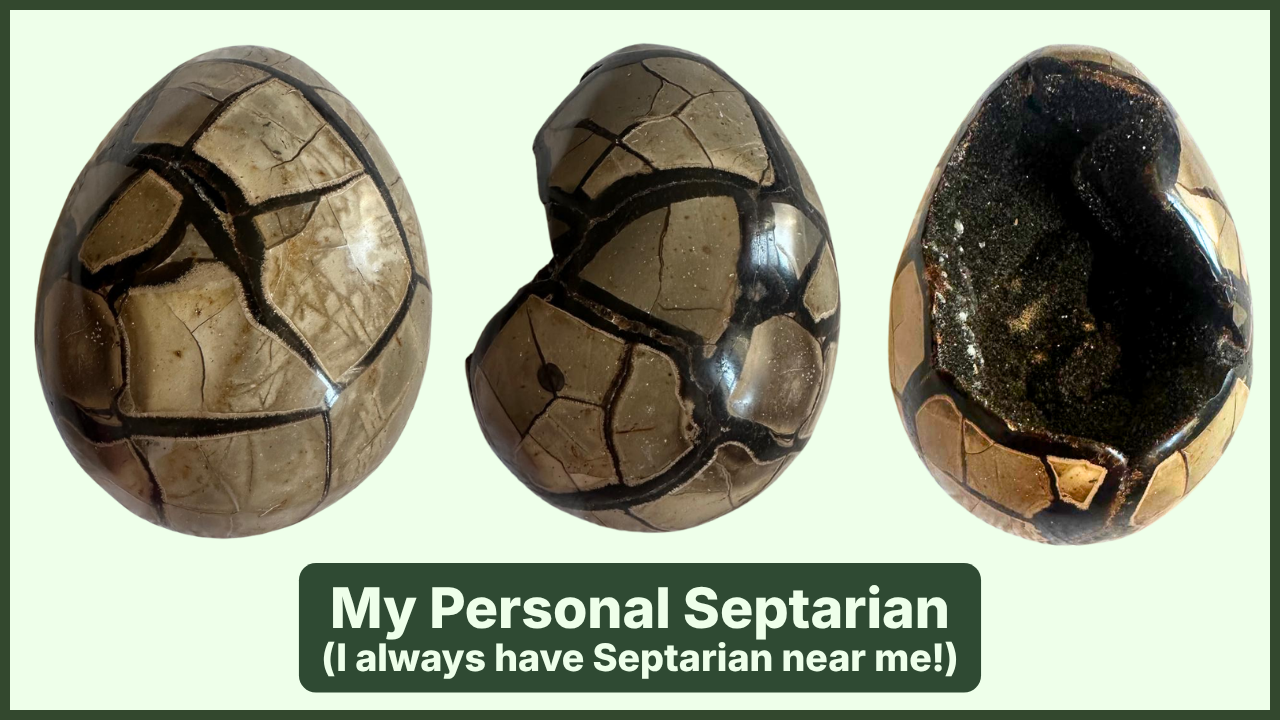
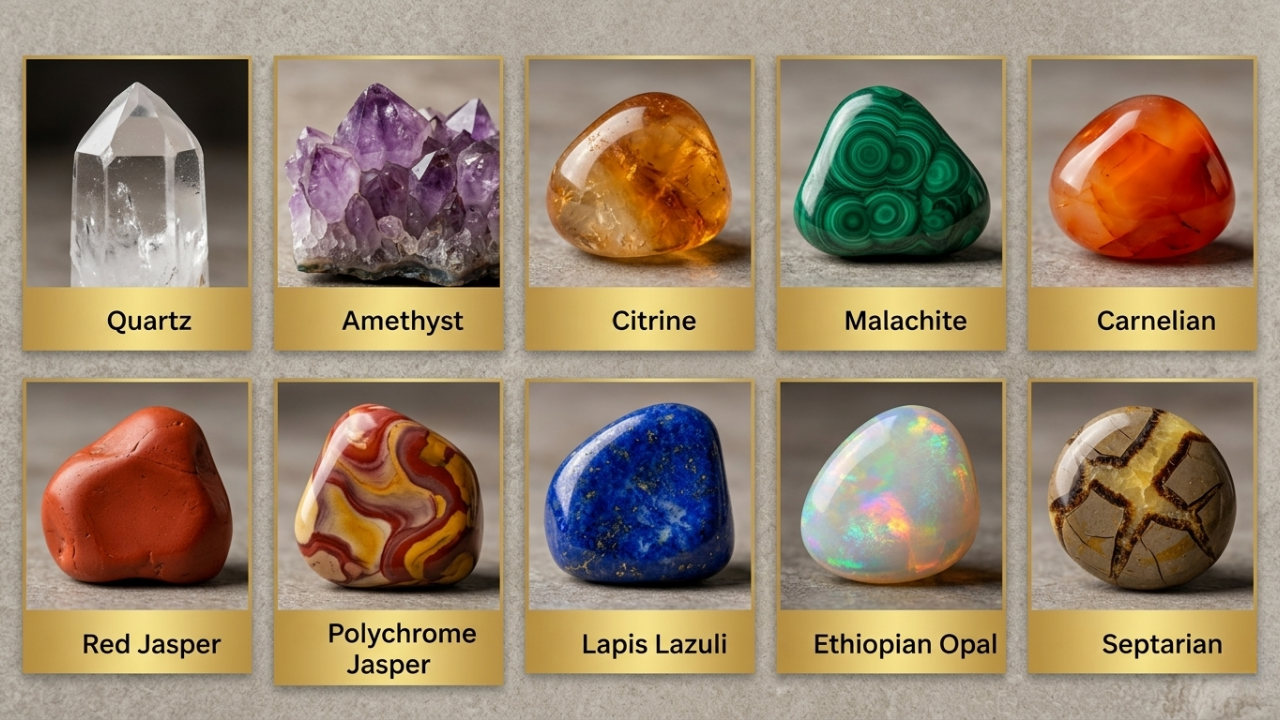
Some stones, such as septarian nodules from Madagascar, carry remnants of ancient life within them, fossilized shells and sediment compacted into mineral form. To hold one is to hold the memory of oceans and organisms long vanished, the fossilized record of relationship itself. Stones, then, are not static matter. They are the condensed intelligence of the earth.
Cultural Continuities
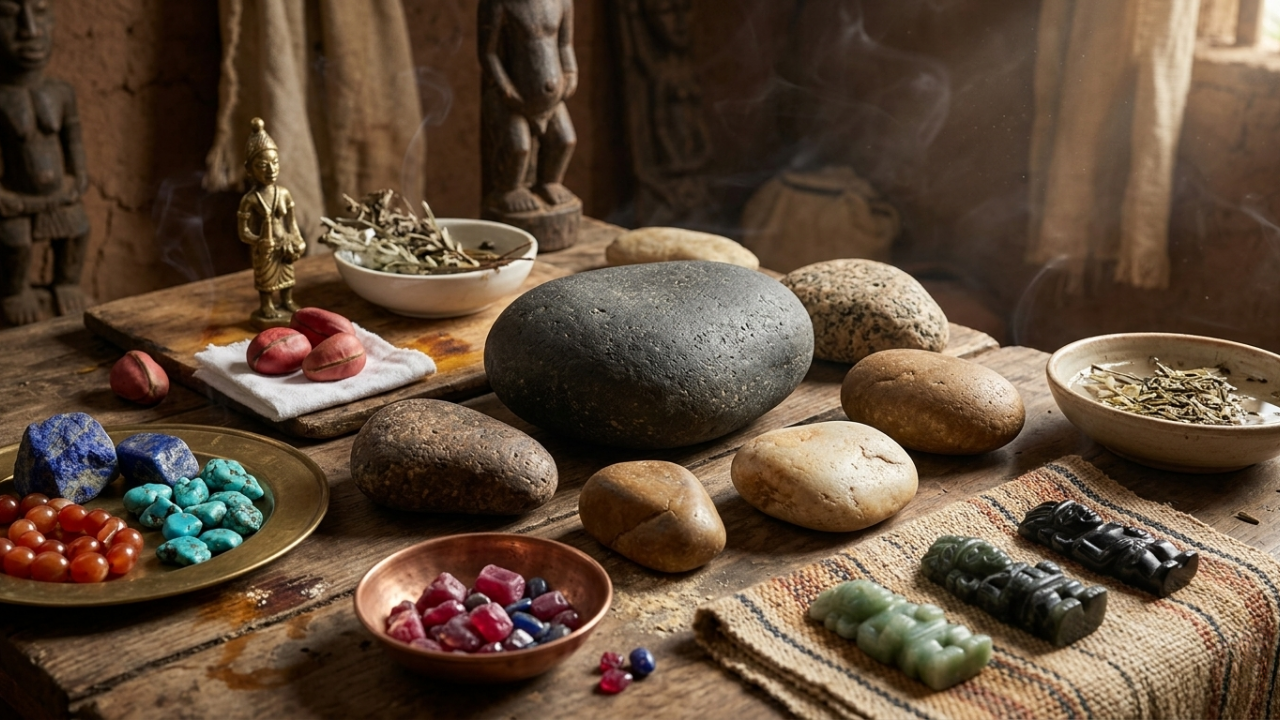
Across Indigenous and ancient traditions, stones have always been seen as sacred vessels of power and presence. In Yoruba cosmology, sacred stones known as otás are used to anchor and honor the Orisa. Each stone is chosen from the riverbed or the earth to embody the energy of a particular deity, like the grounding weight of Ogun or the luminous strength of Osun. These stones are not mere symbols; they are living intermediaries between the divine and the human. Their density and stillness make them perfect keepers of continuity.
The ancient Egyptians adorned their sacred sites and bodies with lapis lazuli, carnelian, and turquoise, believing these stones protected the soul and opened channels to divine wisdom. In India, sapphire and ruby were linked to planetary forces, balancing the energetic centers of the body. The Aztecs and Mayans carved jade and obsidian to represent rebirth and protection. Across cultures, the recognition remains constant; the earth’s interior speaks through stone.
Among the Yoruba, shrines and temples often incorporate naturally found stones rather than quarried or manufactured ones, emphasizing their living essence. The basalt and granite found in many sacred spaces retain the heat of the sun during the day and release it slowly at night, an elemental exchange symbolic of how divinity moves between visible and invisible realms. To this day, devotees collect these stones from rivers and hills, not because of appearance, but because of resonance.
Geology of Memory
Modern science now echoes what ancient people understood intuitively. The earth beneath us is not inert; it is in constant conversation with itself. Geological time moves slowly, yet stones hold energy; they absorb, store, and radiate electromagnetic frequencies. Just as our nervous systems pulse with electricity, the planet’s crust hums with measurable waves. When we hold a crystal, we are in contact with the same frequencies that move through tectonic plates and volcanic flows.
Crystals like quartz, amethyst, citrine, malachite, carnelian, red jasper, and polychrome jasper each have unique compositions that shape their energetic behavior. For instance, malachite is rich in copper, known for conducting energy and cleansing environments. Carnelian contains iron oxide, radiating warmth and activation. Lapis lazuli, composed of lazurite and pyrite, has been used since antiquity to sharpen intuition and expand perception. Ethiopian opal, with its rainbow fire, is hydrated silica that traps microscopic spheres of water and light, creating its characteristic play of color. Its shifting hues are not illusion, they are the physics of diffraction, the bending of light through ordered chaos.
When we look at or hold a stone, we witness how light, pressure, water, and time collaborate to create beauty. To hold these stones is to hold light slowed down into form, photons that became solid through the patience of the earth. In essence, we hold matter that once shimmered invisibly through space.
Living With the Stones
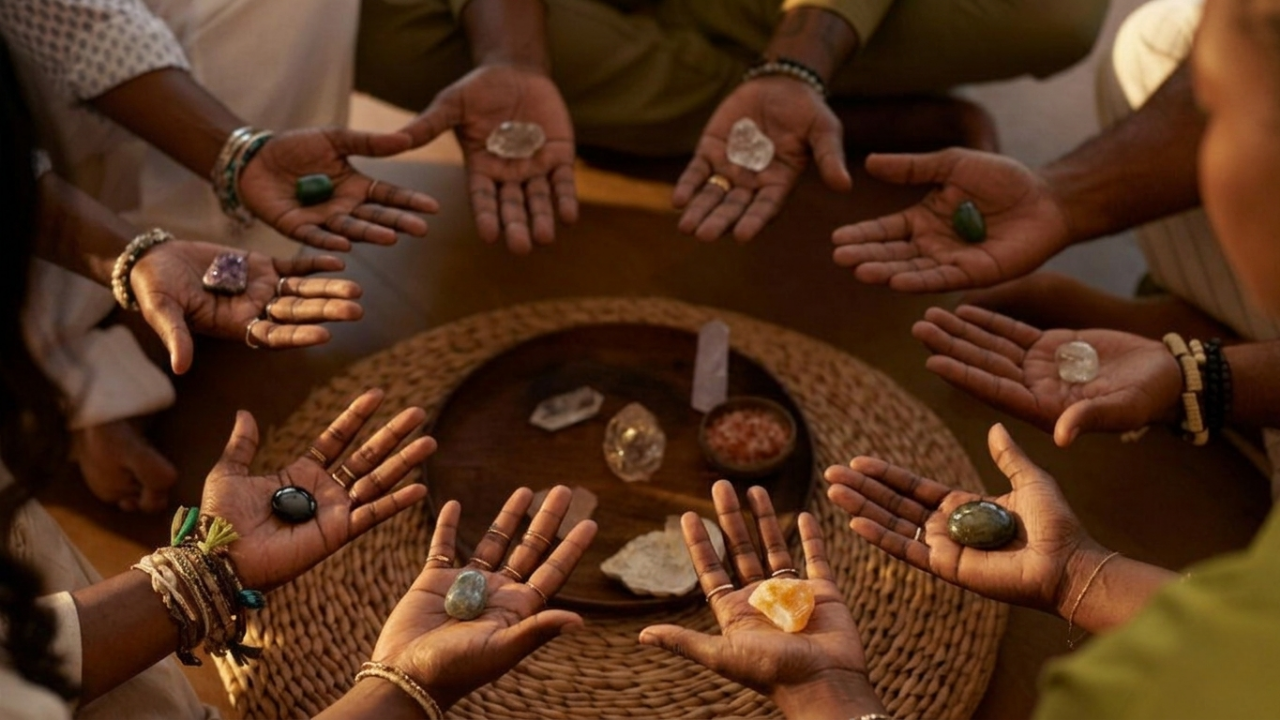
When I began incorporating these stones into my leadership and wellness retreats, it was less about decoration and more about recalibration. Years before Soulful Joy Retreats existed by name, I used crystals and stones as teaching tools during early leadership circles and wellness gatherings. Participants were invited to choose a stone intuitively, one that felt alive in their hands, and to use it as a grounding ally through reflection, movement, or silence. Over time, I noticed something powerful. People who had felt emotionally or spiritually heavy would instinctively press the stones to their hearts, throats, or palms. Some cried quietly, others simply exhaled. Stones do not absorb emotion in the way water does, but they stabilize it, translating grief or confusion into coherence.
At Soulful Joy, these practices deepened. Each participant now receives a stone, often from my collections in Jamaica, sourced from miners I know and respect. The stones are cleansed, not commercially but spiritually, through sunlight, smoke, and song. During one retreat in Negril, a participant held a piece of red jasper through an entire fire ceremony and later said she felt her heartbeat synchronize with the crackling flame. That, to me, is the power of the mineral world. It connects the solid and the unseen.
We live with stone daily, in our homes, on our tables, in the floors we walk upon. Granite countertops, marble baths, slate patios, and river stones in gardens all pulse with the memory of their creation. Even in the most urban environments, stone surrounds us, stabilizing and silently transmitting the wisdom of endurance. When we pause long enough to touch it consciously, we realize that it is alive.
Reflection
Whether you place a crystal on your altar, carry a smooth stone in your pocket, or rest your hand on a marble wall, remember that you are touching an elder of the earth, one that predates humanity itself. Each mineral body carries its own lineage of fire, pressure, and transformation. The same forces that forged them move through us; we, too, are shaped by time and tested by heat.
Some people cleanse their stones in saltwater, others charge them in sunlight or under the moon, while some simply hold them and breathe. However you engage with yours, let it be intentional. Remember that every stone, from Ethiopian opal to Brazilian amethyst, from red jasper to Madagascar septarian, carries the quiet vibration of creation. These are not mere objects; they are witnesses.
To live with stone is to live with memory, to be reminded that endurance and beauty are born from pressure and time.
This essay is part of the Ecology of Indigenous Evolution™ by Kwayera Archer.
© 2025 Global Ase Enterprises. All Rights Reserved.
The Ancient Futurist is a living body of teachings exploring leadership, memory, land, and the unseen threads shaping our lives.
This is not content designed for speed.
It is work meant to be returned to.
Stay close to the work.
Receive monthly reflections, new writings, and quiet invitations to go deeper.
We will never sell your information, for any reason.
