On Ọ̀ṣun, the River that Remembers, and the Power of Woman to Multiply Life
Dear friend,
This month I have been sitting with a single idea, and its name is confidence. Not the loud sort that performs for a room, but the quiet knowing that recognizes who you are before anyone agrees. I have come to believe that the deepest confidence is not something we manufacture. It is something we remember, an inheritance carried in the body and the bloodline, waiting to be claimed. So let me show you where mine comes from.
Let me begin at the water.

In southwestern Nigeria, in the land of the Yoruba people, there is a river that has been loved for longer than most nations have existed. It moves through forest and town with a slow, unhurried grace, and the people who live beside it call it Ọ̀ṣun. We pronounce it softly, “oh-shoon,” and when we do, we are not speaking of water alone. We are naming a presence.
Ọ̀ṣun is an òrìṣà, among the divine forces the Yoruba understand as the many faces of a single Creator. If you have never heard of her, let me draw her for you. She is the spirit of fresh water, of rivers and springs, the kind that makes life possible. She governs love and beauty, fertility and birth, healing and wealth, sweetness and joy. Yet do not mistake her for softness without spine. Beneath the honey she carries the deep authority of the source, and the world has learned, more than once, that it cannot flourish without her.
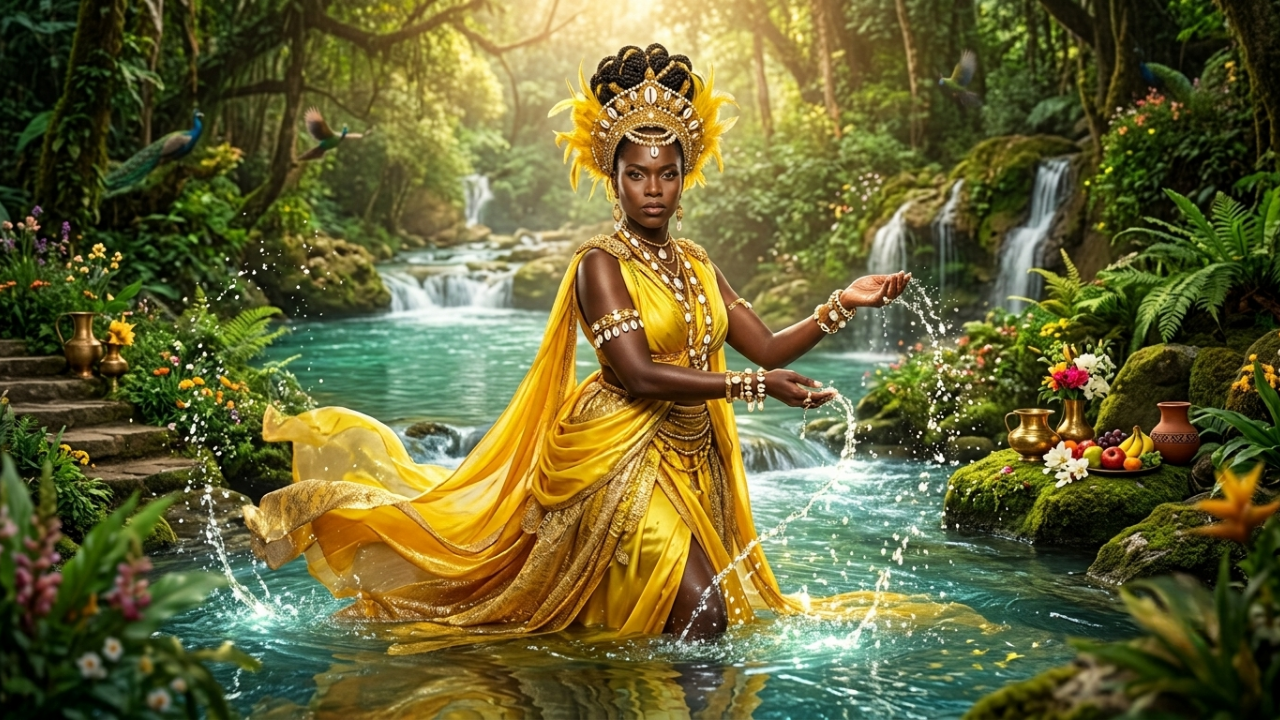
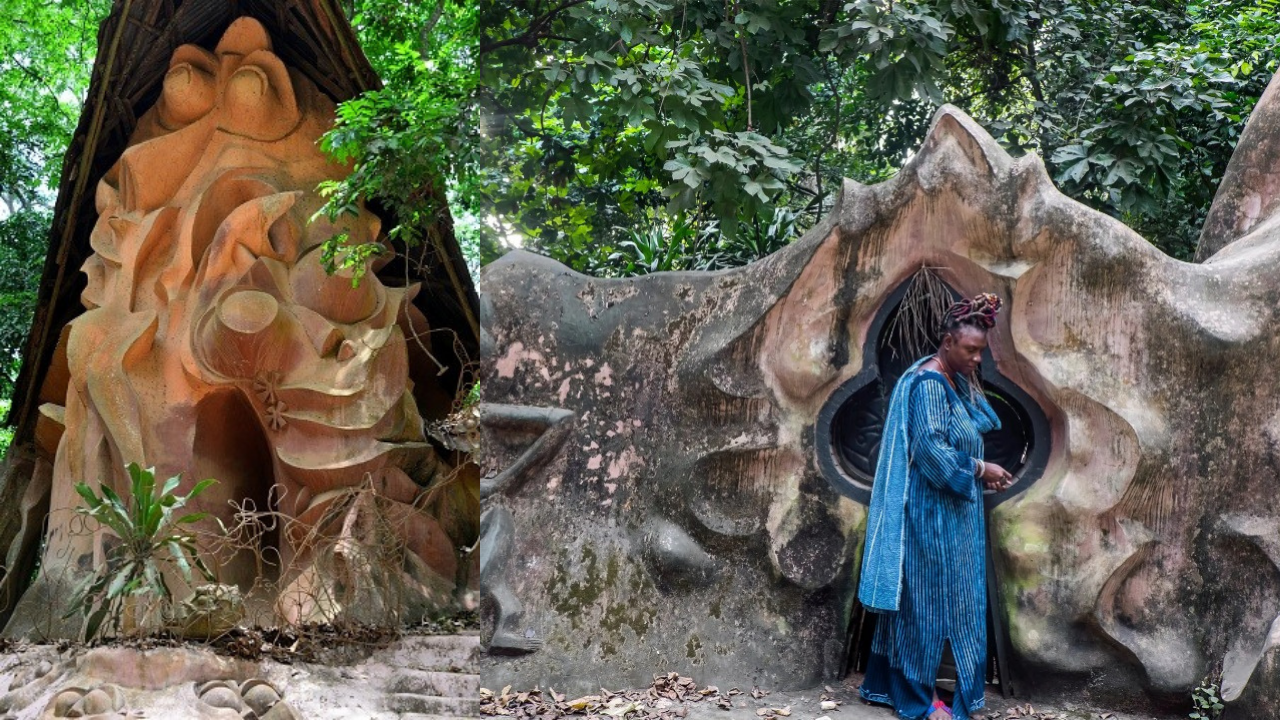
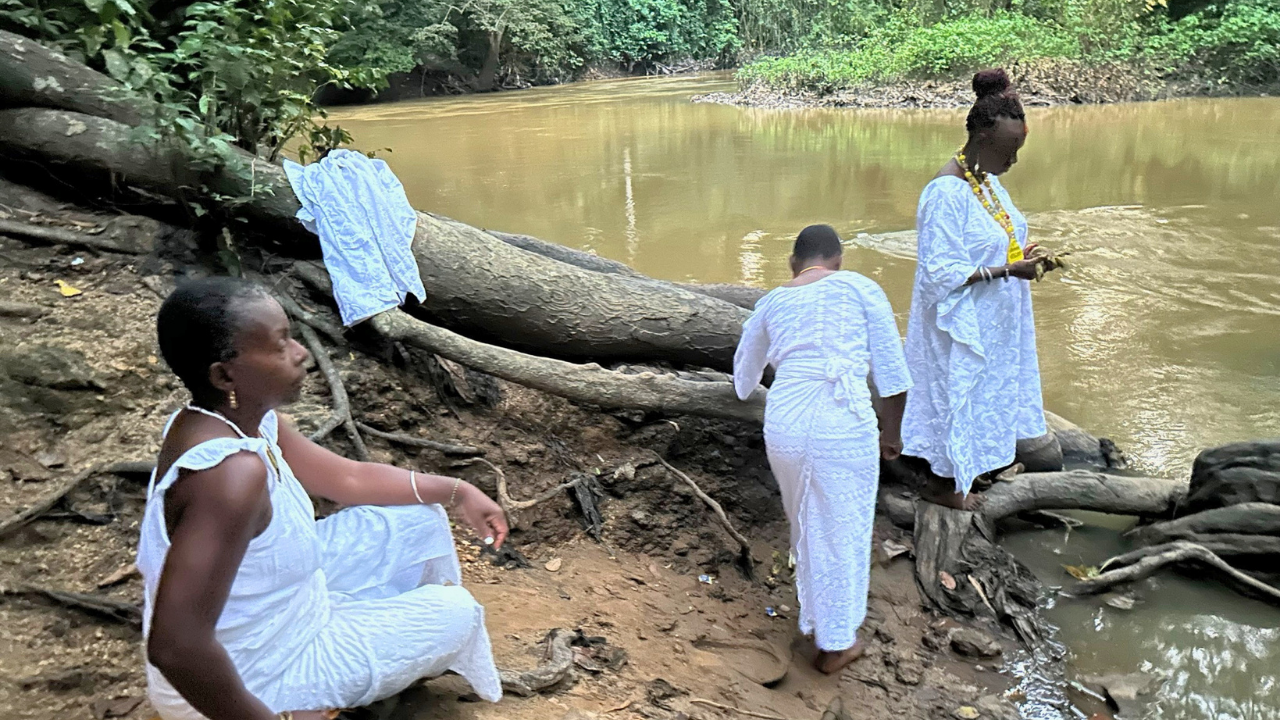
Her home is real, not only mythic. There is a region in southwestern Nigeria that carries her name, Osun State, and at its heart sits the town of Osogbo, where her river runs through an ancient forest. That forest is the Osun-Osogbo Sacred Grove, among the last great holy woodlands of the Yoruba, now protected by the world as a UNESCO heritage site. Once a year the town fills with pilgrims from every corner of the earth, arriving at the water to greet her, offer thanks, and request the blessings she pours so freely: children, healing, and fresh courage for the road ahead. I have the honor of serving the cultural life of that grove, and I can tell you the reverence there is not performance. It is memory, kept alive across thousands of years.
The old stories tell how she came to matter. When the divine forces first descended to shape the world, they were many, and only one among them was a woman. They divided the work of creation and arranged it carefully, yet they made no place for her. She did not argue. She withdrew her waters and waited. Soon nothing the others built would hold. The rains failed, the seeds refused, and confusion spread through everything they touched. Only when they returned and honored her did the world steady itself and live. From that day the teaching has never changed: the feminine is not an ornament upon creation. She is the condition of it.
This is why she is loved. She is the healer called when medicine fails, the mother who answers the longing for a child, the protector standing between women and harm, the diplomat whose patience cools the hottest quarrel. Her symbols are tender and proud at once: brass and gold, honey and the yellow of ripe abundance, the fan she uses for cooling and command, the mirror in which she gazes and knows herself completely. That self-knowledge is its own teaching. A woman who can look at her own reflection without flinching already holds a kind of power the world cannot give or take.
And she traveled. When millions were stolen from West Africa and carried across the ocean in chains, she went with them, hidden in memory and song. In Cuba and in Brazil she answered to new sounds of the same name, Oshún, Oxum, and she survived everything built to erase her. A goddess who crosses an ocean inside the hearts of the enslaved and arrives still whole is not a small thing. She is proof that what is sacred in us cannot be drowned.
I tell you all of this now for a reason. As the Yoruba calendar turned into its 10,068th year this June, the ancient wisdom of Ile-Ife marked the season with the sign of the primordial Mothers, and its message for our time is unmistakable: honor, protect, and empower women, not as sentiment, but as the path to a humanity that finally holds together. The old knowing names the feminine as the multiplying force. Give a woman a seed and she returns a harvest. Give her a house and she builds a home. Give her a wound and she finds a way to heal it. This is the power I want us to step into now, with confidence in who we are and clarity about why we are here.
So I leave you with a practice, a quiet rehearsal of the self you are becoming.
Find still water in your mind, a river, a pool, a calm shoreline at dawn. Let your breath slow until it moves like the current. Now see the woman you are growing into, the one who has already crossed the threshold before you. Notice her ease, her steadiness, the way she carries her worth without explaining it. Stay with her for several breaths. Then bring one quality of hers home into your day. The body believes what the mind rehearses, and courage grows familiar through repetition.

If your spirit is asking for deep water this season, come to us. Our Roots and Sea Retreat gathers at Zemí Eco Sanctuary in the Kingston Hills of Jamaica from the eighth through the twelfth of October, a homecoming for those ready to lead from wholeness rather than depletion.

Hear me say this plainly before you go. The confidence you are reaching for already lives inside you, the same way the river was always present beneath the land, waiting only to be uncovered. You owe no one proof of your right to take up space, lead boldly, and be seen. You inherited it. Walk through this season as a woman who knows her own worth and lets that knowing move quietly ahead of her, into every room she enters.
Until then, may you move like Ọ̀ṣun: sweet as honey, deep as the river, and certain that the world cannot do without what you carry.
With love and àṣẹ,
Kwayera Archer
Change Navigator and Ancient Futurist


Responses